The Resilience of Grass Trees
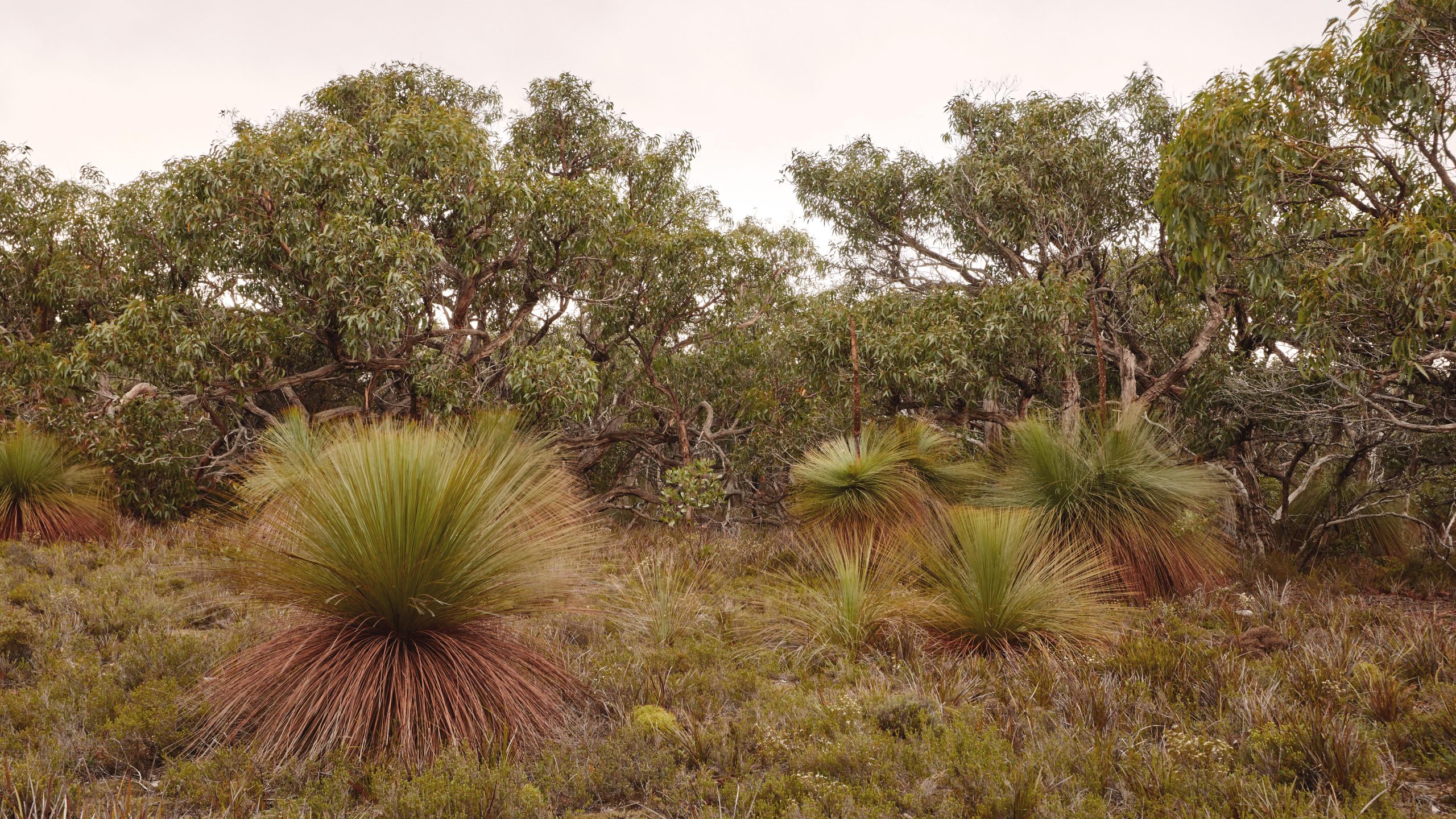
Salvaged from the Bellarine, relocated three times and burnt by hand, the grass trees now push new growth from their blackened crowns.
There is a moment, standing in front of a blackened grass tree with no green left on it, when you have to trust the plant.
Two Xanthorrhoea australis came to us from the edge of a gravel mine on the Bellarine Peninsula, where their habitat was about to be lost to excavation. We salvaged them, root-balled them and transported them to Carlton Gardens for the 2024 Melbourne International Flower and Garden Show. After nine days of exhibition, they were moved again, this time to their permanent home in East Geelong.
Three relocations is a lot for any plant. But once they arrived, we had one more thing to do.
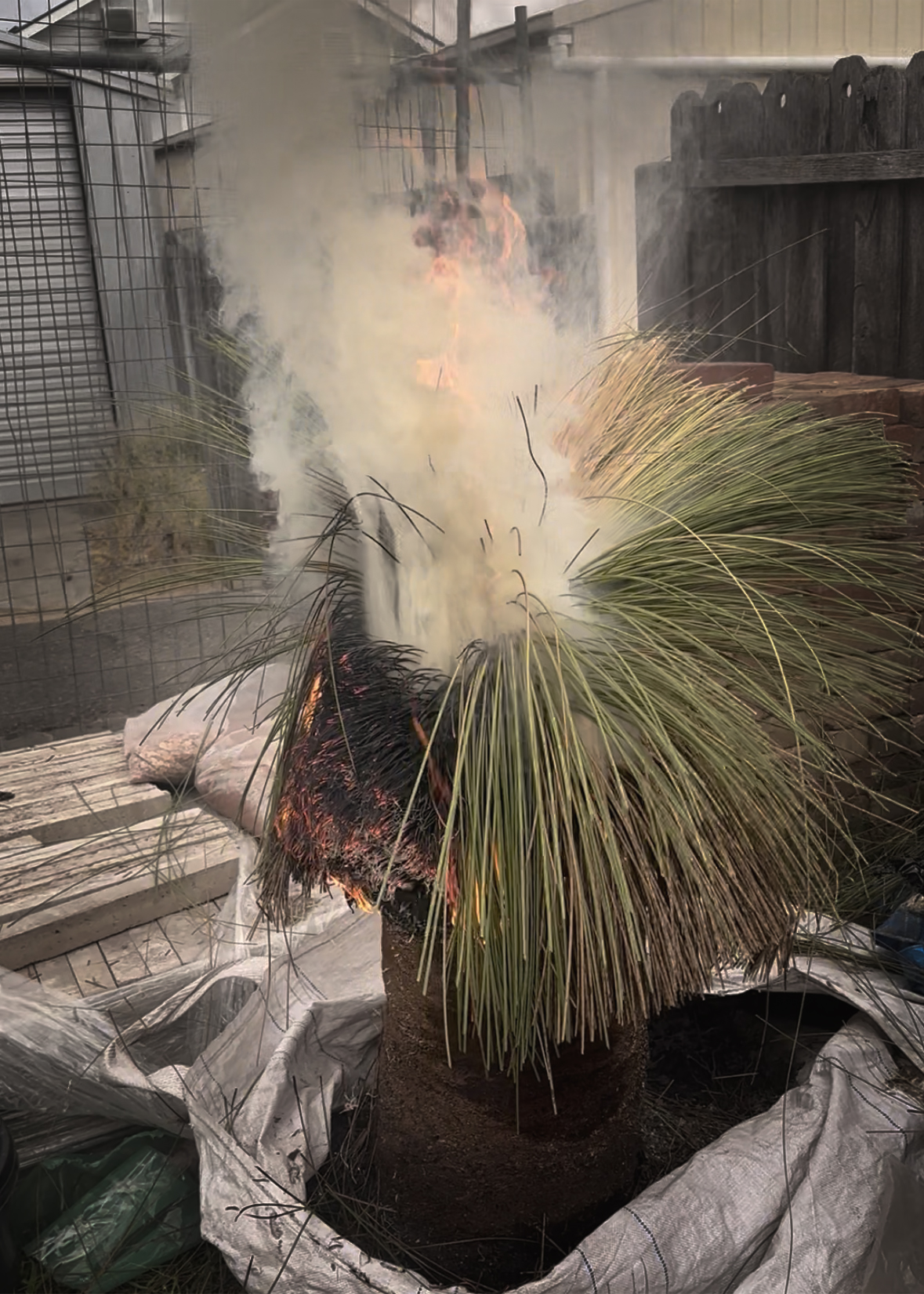
The grass trees were burnt.
The foliage was completely removed by fire, leaving only blackened trunks. It was confronting to see, but fire is part of the life of Xanthorrhoea australis. The growing point sits deep within the trunk, protected by tightly packed leaf bases. While the outer foliage burns, the plant can remain alive at its core.
Within weeks, new growth began to emerge from the blackened crowns.
This is what makes grass trees such remarkable plants. Fire is not simply something they survive. It is part of how they grow and regenerate. After a burn, fresh leaves emerge from the centre and, given time, flowering follows.
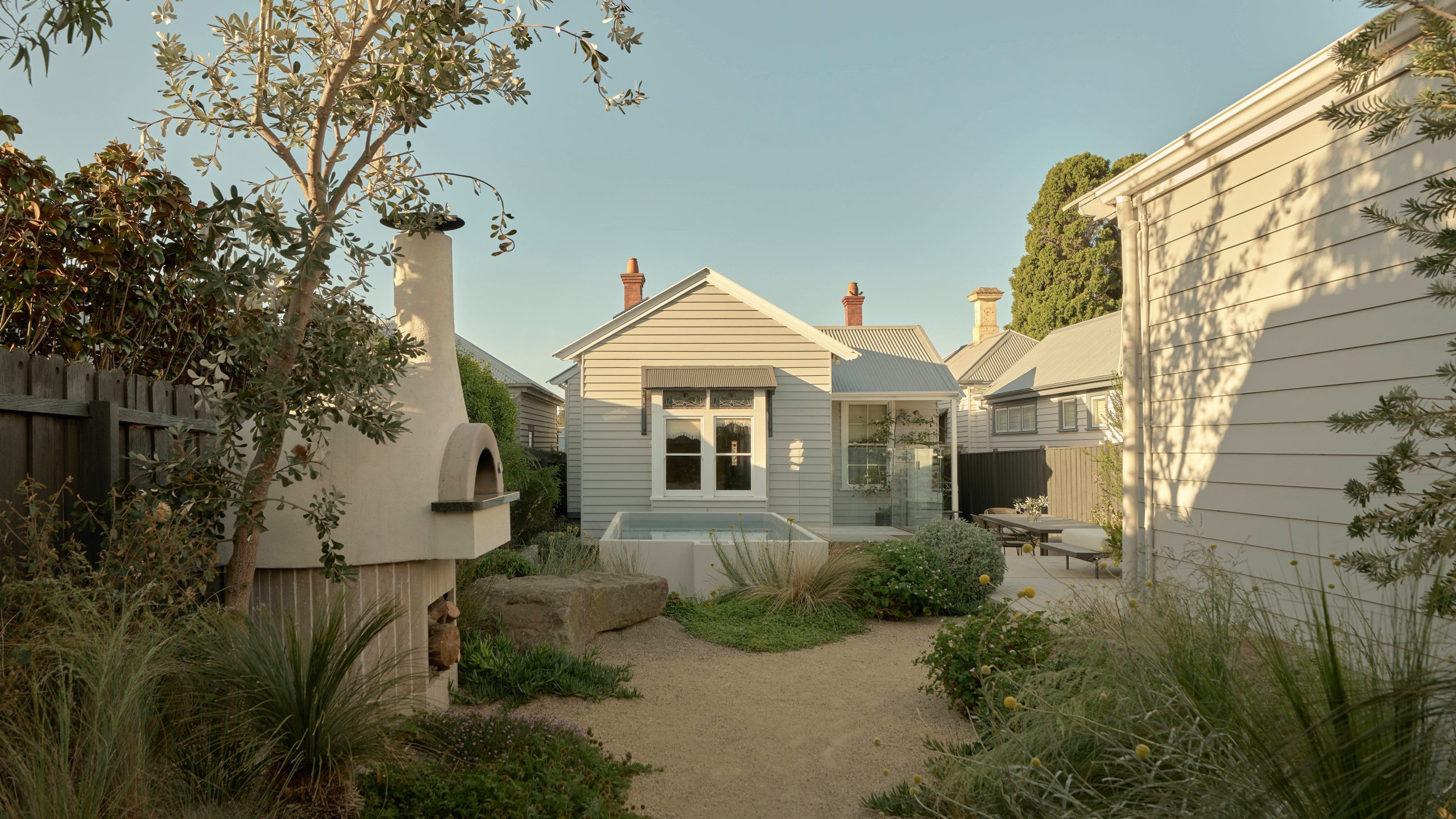
The two trees are now settling into their new home in East Geelong. They have been moved, exhibited, planted and burnt, yet they continue to grow in the same region they came from.
There is something fitting about that. These trees were established on the Bellarine Peninsula long before they became part of a garden. Now they are growing there again, carrying with them decades of growth and a reminder of what these plants are capable of.